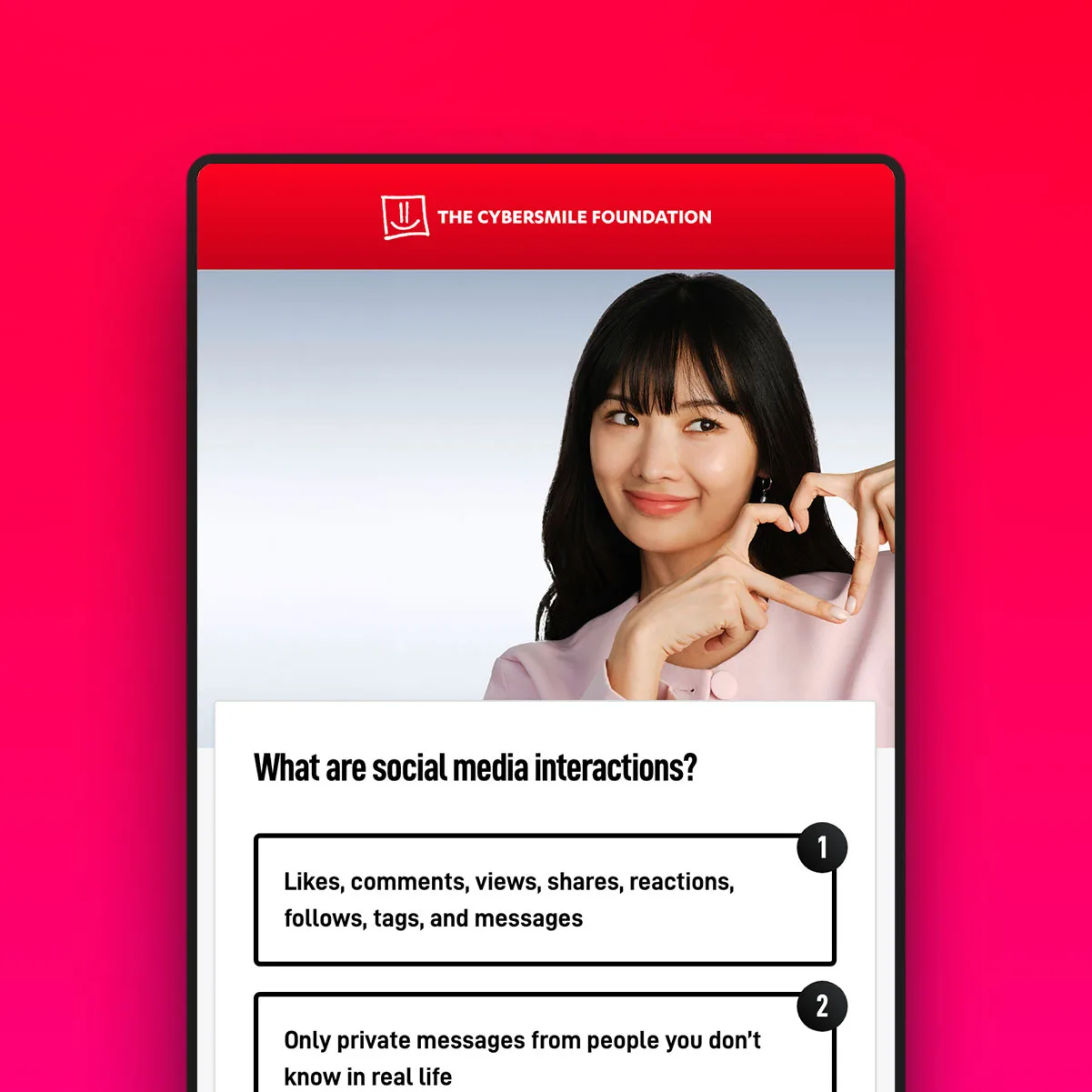
Likes, comments, views, and messages are part of everyday online life, and the reactions we receive can influence how we feel about ourselves. The second module (2 of 6) in the Cybersmile x Erborian Self-Esteem Academy looks at why online feedback can carry so much emotional weight and how to keep it in perspective.
Research from Likes and Lows 2026 found that 58% of respondents said social media interactions such as likes, comments, and views affect how they feel about themselves. Positive feedback can provide encouragement and connection, but visible engagement numbers can also create pressure to check notifications repeatedly or compare the response to one post with another.
You'll explore approval chasing, posting habits, and the attention loop that can develop when we're waiting for people to react. The questions also explain how timing, algorithms, audience behavior, and chance can influence engagement, and why likes and views aren't a reliable measure of someone's worth or relationships.
Practical guidance helps you recognize when online feedback is affecting your mood, manage notification habits, respond safely to unpleasant comments, and think about what you share and why.