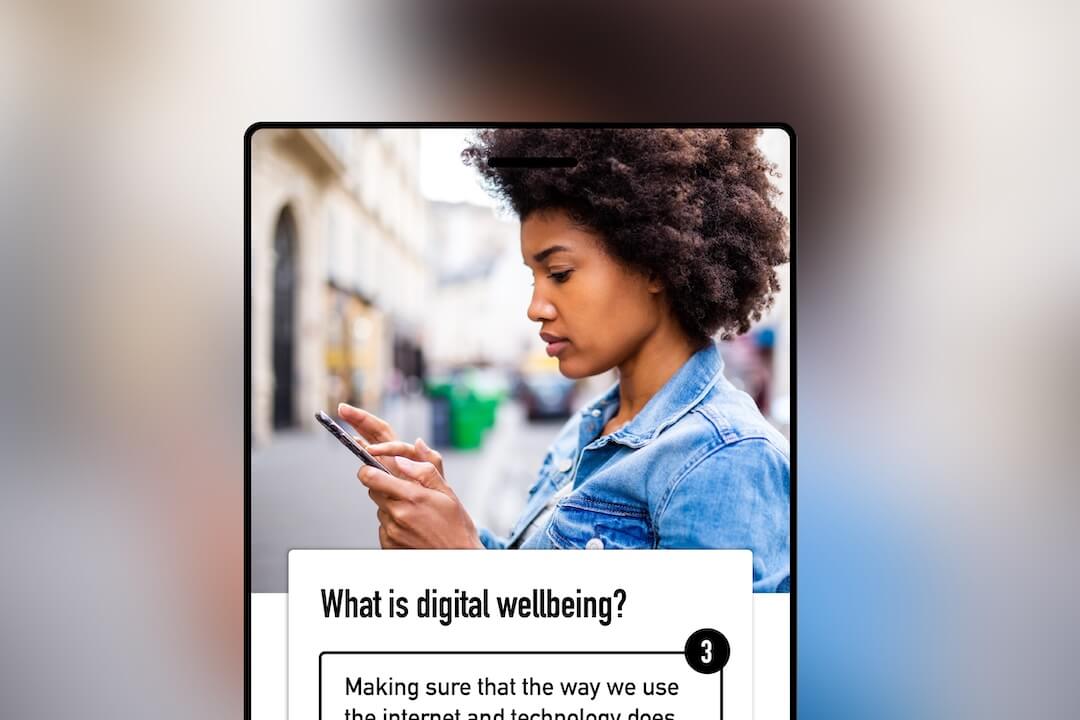
We are excited to announce the launch of our third annual Digital Wellbeing report exploring the impact that social media use has on 16- to 24-year-old users.
Digital Wellbeing 2025 asked 1000 participants aged 16-24 across the UK a series of questions relating to the way that their social media use impacts them physically and emotionally. Important topics such as cyberbullying, mental health, body image, social comparisons, doomscrolling, social media addiction, and many more were explored as part of the research project.
The findings from Digital Wellbeing 2025 are stark and will ensure that we continue offering data-led advice, education, and support to those in need. The report also offers a valuable opportunity to examine and compare the results to previous years' data, helping us to identify patterns and trends.
Dan Raisbeck, Co-founder, The Cybersmile Foundation
Our ongoing commitment to better understand the relationship between Gen Z and social media is supported by Cybersmile advisory panel member Dr. Radha Modgil, a medical doctor and wellbeing expert who has been a trusted voice in health and wellness since 2008.
The Cybersmile Digital Wellbeing 2025 report highlights the significant impact of social media on our health as well as our physical, mental, emotional, and social wellbeing. The survey reiterates the negative effects that time online can have on our body image, sleep patterns, self-esteem, and our ability to express ourselves authentically.
Dr. Radha Modgil, Cybersmile Advisory Panel
Insights from Digital Wellbeing 2025 will enable us to not only identify new and emerging issues but also to learn more about exactly who is being affected and how deeply. This will help us to find the most effective prevention and solution strategies for a wide range of demographics.
This report reflects how all of us have a responsibility to act and ensure that online platforms have the necessary structures and processes in place to keep users safe. We need to ensure that everyone is prepared with the skills needed to navigate online life in a way that contributes positively to our health and wellbeing.
Dr. Radha Modgil, Cybersmile Advisory Panel
The study was conducted by Censuswide on behalf of Cybersmile between 05.21.2025 and 05.23.2025 across England, Wales, Scotland, and Northern Ireland. The regional data offers valuable insights for major cities across the UK, including Belfast, Birmingham, Brighton, Bristol, Cardiff, Edinburgh, Glasgow, Leeds, Liverpool, London, Manchester, Newcastle, Norwich, Nottingham, Plymouth, Sheffield, and Southampton.
Censuswide abides by and employs members of the Market Research Society and follows the MRS code of conduct and ESOMAR principles. Censuswide is also a member of The British Polling Council.
Key findings from Digital Wellbeing 2025
- 58% have been cyberbullied or abused online.
- 38% say social media makes them want to permanently change their body through surgery.
- 83% say content on social media makes them feel pressured to be perfect.
- 82% say social media negatively affects the way they feel about their own bodies.
- 87% say social media negatively affects their mental health.
- 73% say social media negatively affects their physical health.
- 85% feel unsatisfied with their life when comparing it to others on social media.
- 31% feel addicted to bad news online.
- 27% don't feel safe to share their opinions and views online.
- 45% are worried they have an addiction to social media.
- 53% feel better when they spend less time on social media.
- 48% say their sleep is negatively impacted by the amount of time they spend online.
- 25% say their diet is negatively impacted by the amount of time they spend online.
- 25% say their exercise is negatively impacted by the amount of time they spend online.
- 36% say their study is negatively impacted by the amount of time they spend online.
- 62% of women have been cyberbullied or abused online compared to 55% of men.
- 51% of women say social media makes them want to permanently change their body through surgery compared to 25% of men.
- 91% of women say content on social media makes them feel pressured to be perfect compared to 75% of men.
- 91% of women say social media negatively affects their mental health compared to 83% of men.
- 91% of women feel unsatisfied with their life when comparing it to others on social media, compared to 81% of men.
- 33% of women don't feel safe to share their opinions and views online compared to 21% of men.
The findings from this latest research demonstrate again, as in previous years, that the impact of social media use on the physical and emotional health of Gen Z users is profound and needs more investigation.