






We launched "Stop The Forced Feed," a research-based multi-channel campaign to raise awareness of how social media algorithms serve harmful content to people without their knowledge or consent and to call for policy reform around harmful algorithms.
The initiative advocated for transparency, accountability, and user choice through the launch of the Cybersmile PROTECT framework, which was published as part of the campaign. The framework called for content with consent as a basic user right.
The success of the campaign saw Cybersmile secure meetings, submit our evidence, and raise the issue directly with a number of key stakeholders, including Prime Minister Sir Keir Starmer, the European Commission, Ofcom, Members of Parliament, and the Commissioner for Human Rights, to name a few.
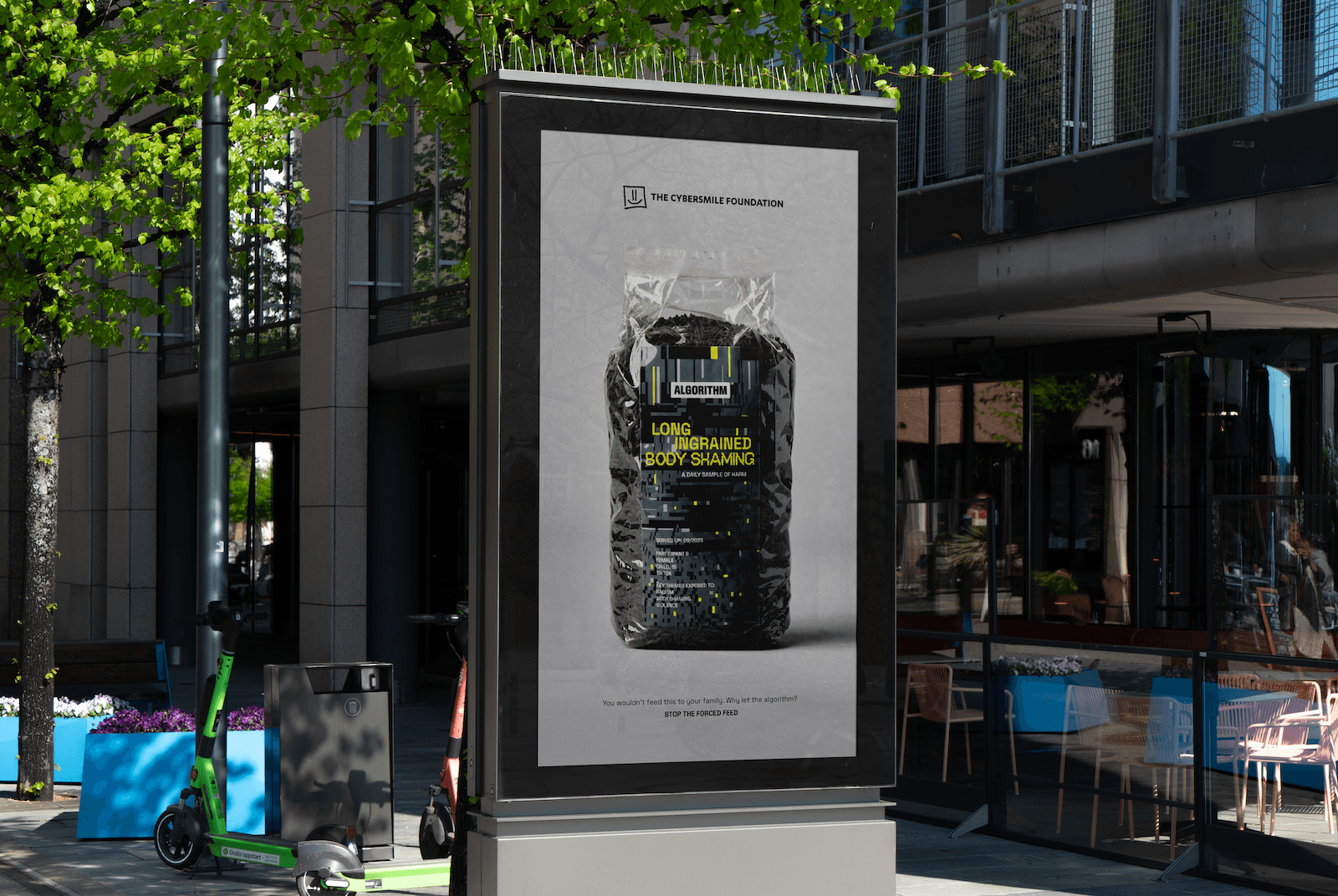
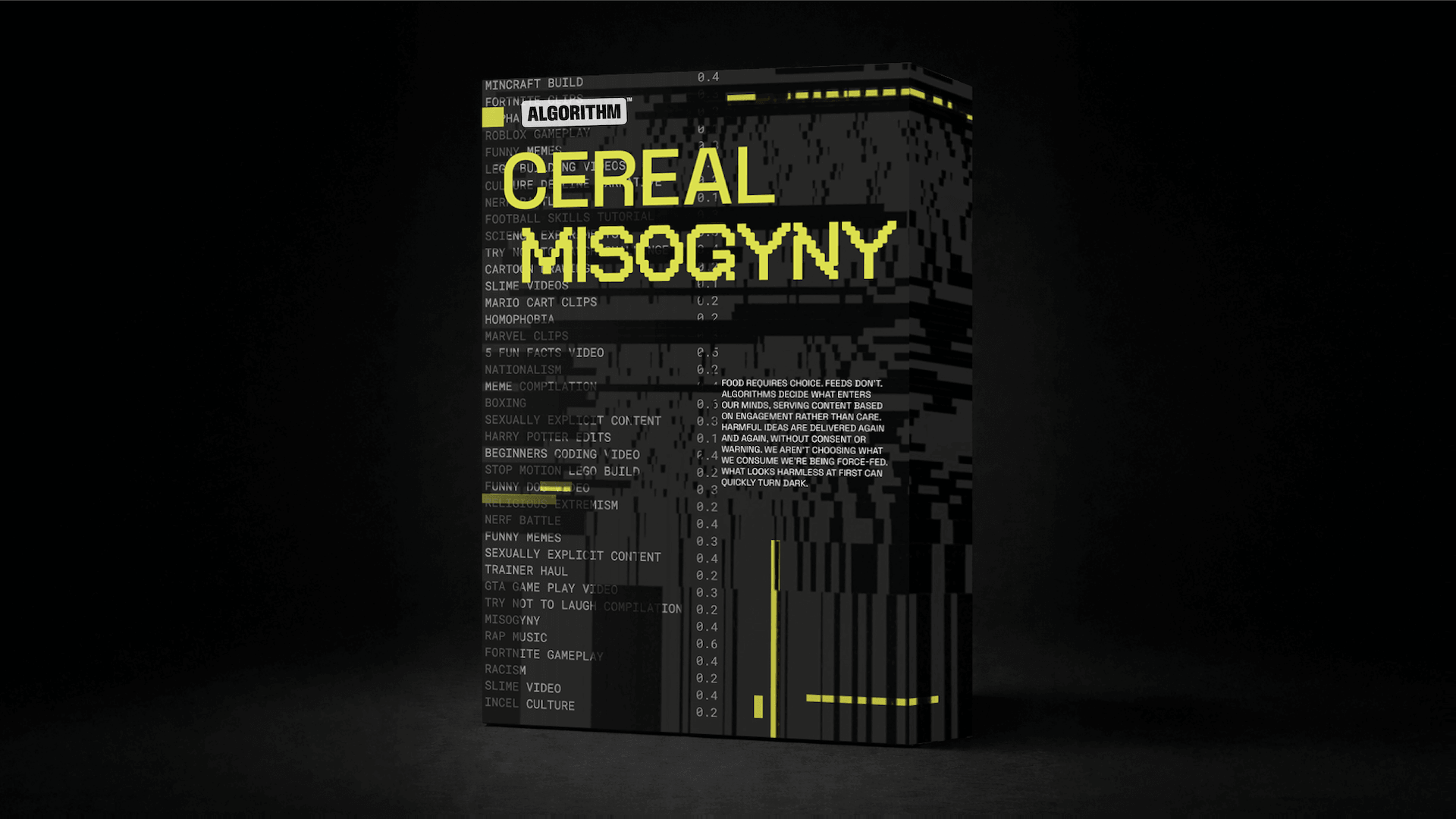
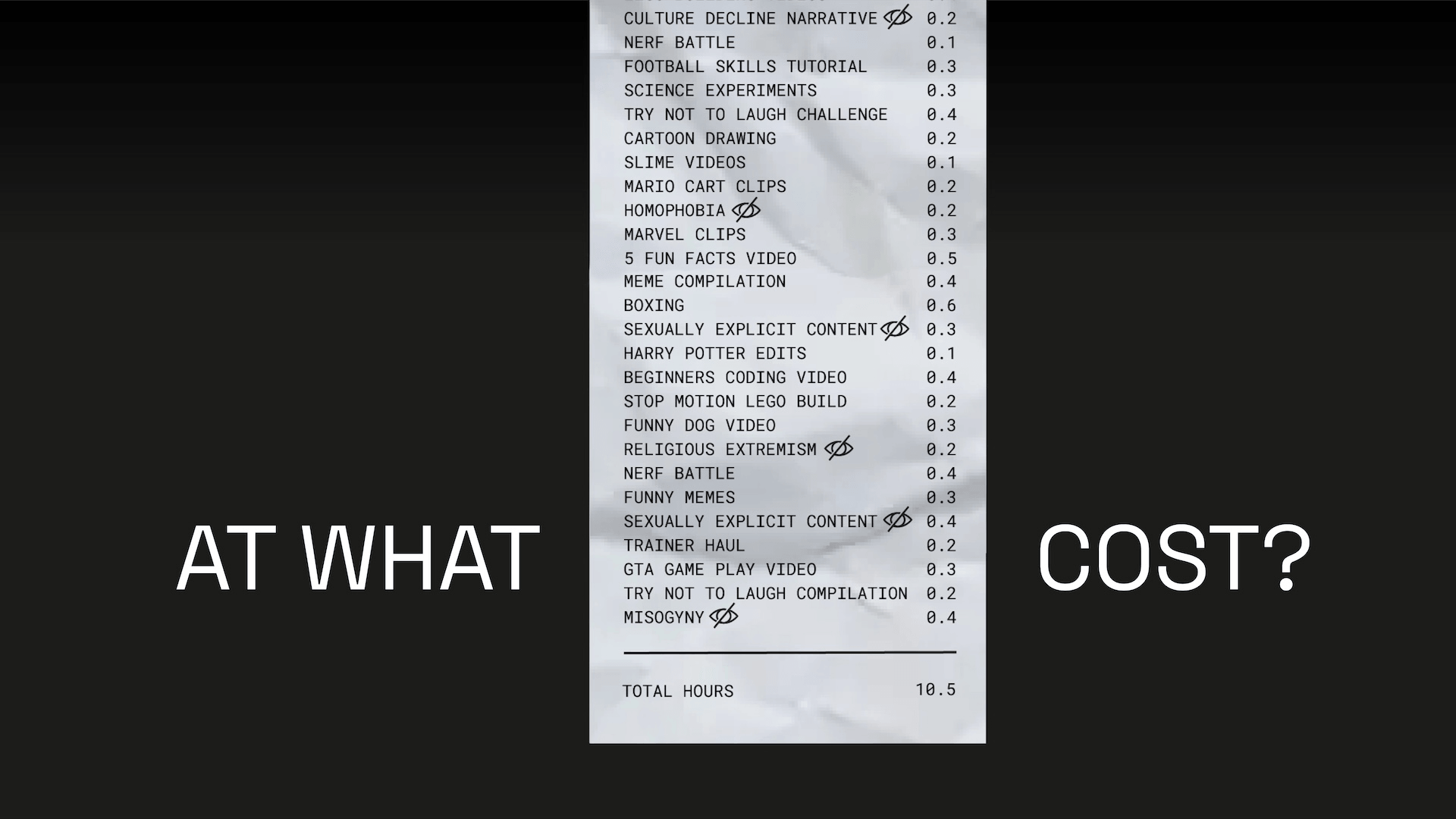
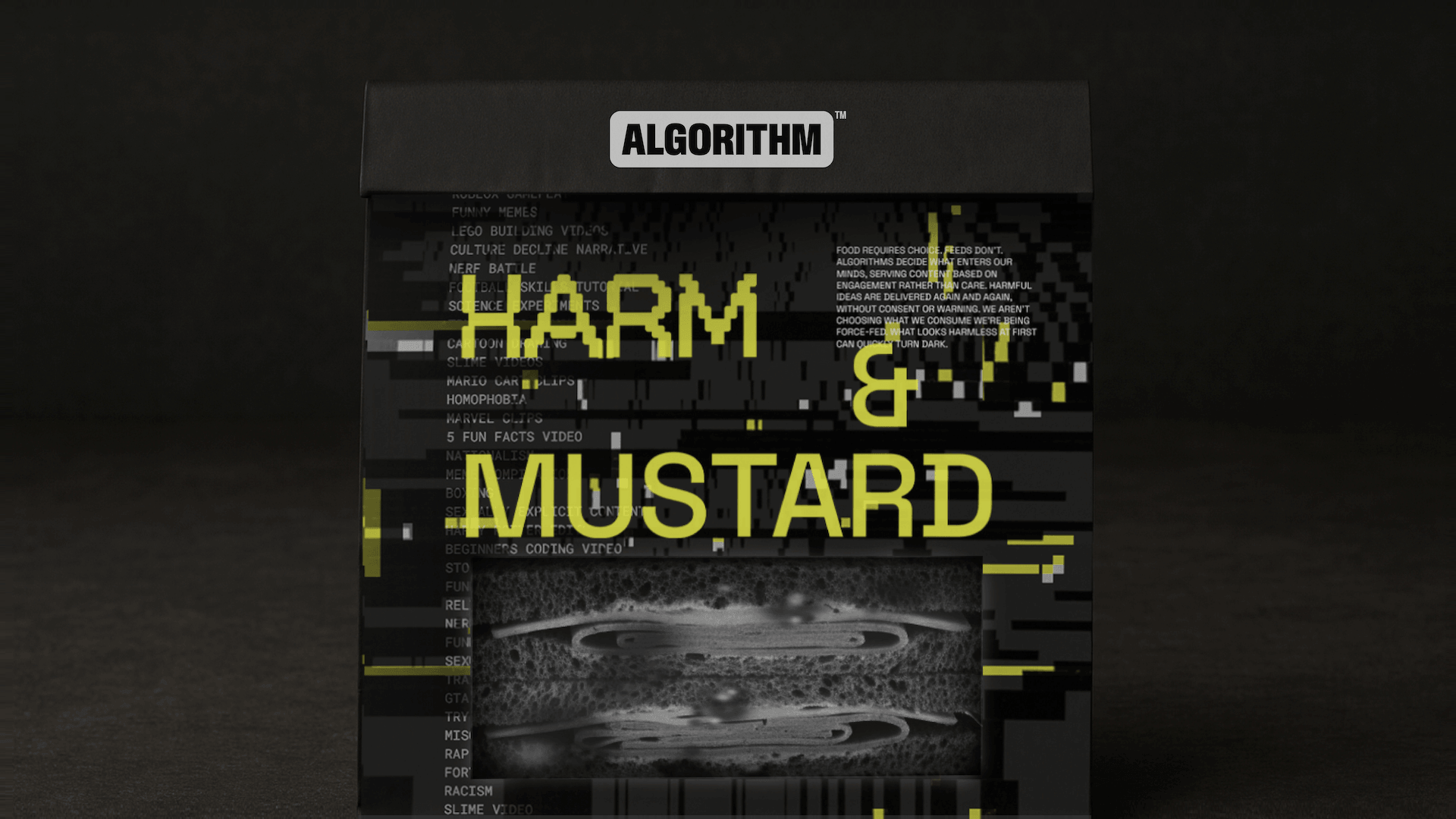
At the heart of the campaign was Algorithm™, a fictional food brand created to show how harmful material such as racism, misogyny, hate speech, and graphic violence is "force-fed" to social media users. Everyday grocery items were reimagined with labels and packaging that brought to life the campaign research, with each item representing a participant in the study and detailing real content served to them on their social feeds.
These products were packaged into "Food HARMpers" and delivered to policymakers, creators, journalists, and public figures to spark meaningful debate around algorithmic harm. Pop-up retail activations in Tesco brought the concept to members of the public, turning a complex digital issue into something tangible and thought-provoking.
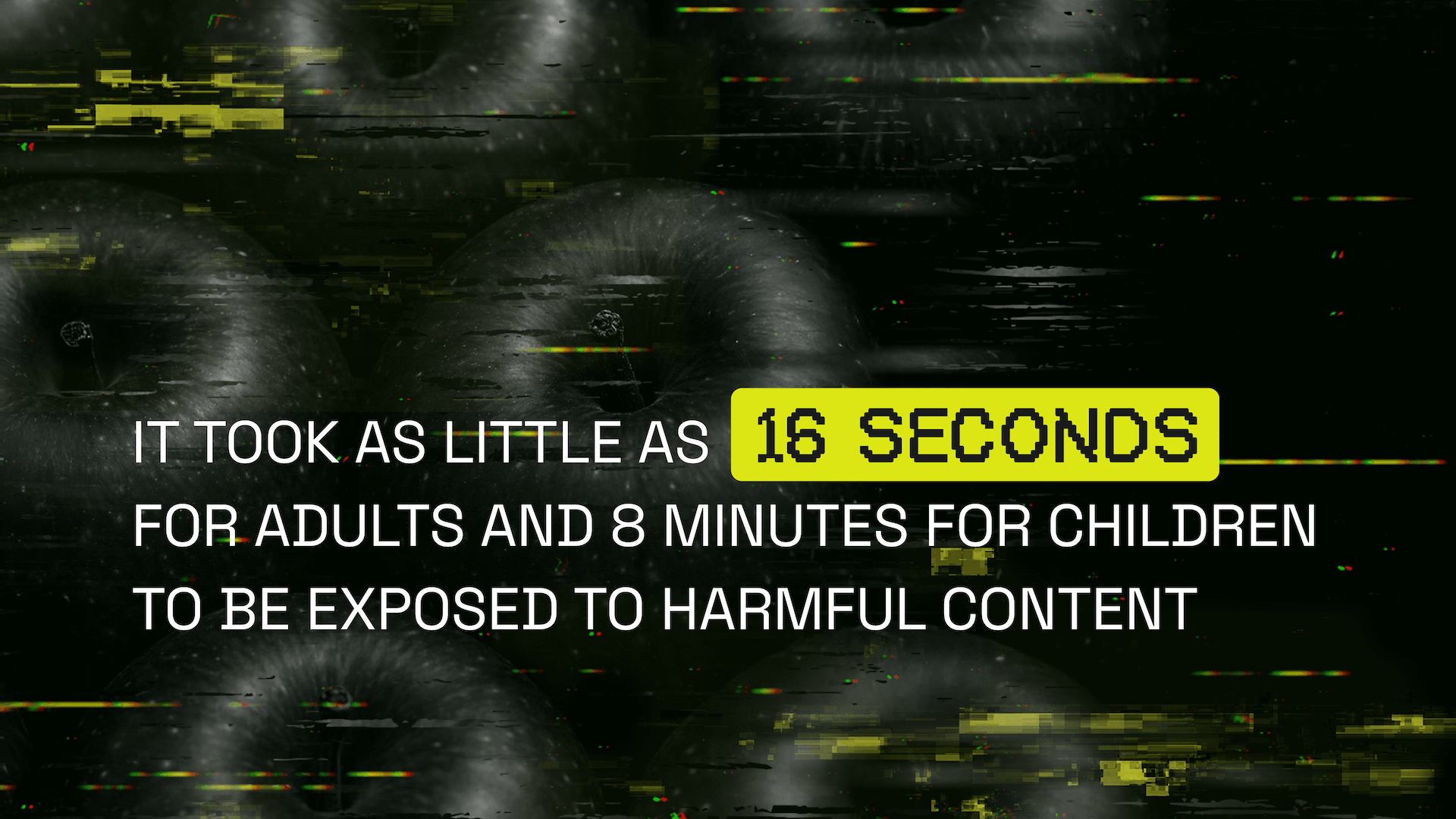
Alongside the creative work, we worked with behavioral scientists to carry out practical testing and nationally representative research, revealing how quickly harmful content can appear in feeds, how little control users feel they have over their online experiences, and how they would like to be able to control their algorithms.
Campaign timeline
This timeline traces the evolution of Stop the Forced Feed, documenting Cybersmile's research, policy engagement, regulatory submissions, and key external developments that have shaped the growing conversation around algorithmic harm, recommendation systems, and user agency.
June 2025 – Stop the Forced Feed campaign begins
Cybersmile begins developing Stop the Forced Feed, establishing the campaign's central principle that online safety must address not only harmful content but also the recommendation systems responsible for amplifying and delivering it.
October 2025 – Research program launched
Cybersmile undertakes research studies into recommendation systems, user agency, and algorithmic harm, laying the foundation for the campaign's evidence base.
January 2026 – Evidence submitted to UK policymakers
Cybersmile submits its research findings and evidence on algorithmic harm to Ofcom, Members of Parliament, and UK Government ministers, calling for greater accountability and meaningful user agency over recommendation systems.
February 2026 – Forced Feed 2026 Report published
Cybersmile publishes the Forced Feed 2026 Report, presenting original research into algorithmic harm, recommendation systems, and user agency, alongside practical recommendations for improving online safety.
February 2026 – Stop the Forced Feed campaign launched
Cybersmile officially launches Stop the Forced Feed alongside the Forced Feed 2026 Report, presenting original research into algorithmic harm, recommendation systems, and user agency.
February 2026 – PROTECT Framework published
Cybersmile publishes the PROTECT Framework, setting out a practical roadmap for reducing algorithmic harm through greater transparency, accountability, and user agency across recommendation systems and social media platforms.
February 2026 – Industry engagement begins
Cybersmile begins direct engagement with major social media platforms to discuss the findings of the Forced Feed 2026 Report and the need for greater platform accountability and user control around recommendation systems.
February 2026 – Evidence submitted to the Commissioner for Human Rights
Cybersmile submits its findings and evidence on algorithmic harm to the Council of Europe's Commissioner for Human Rights, advocating for greater user agency and stronger protections against algorithmic harm.
February 2026 – Stop the Forced Feed reaches Downing Street
Cybersmile takes evidence on algorithmic harm and recommendation systems to Downing Street, London, to raise awareness of harmful algorithms and the need for user agency.
February 2026 – Evidence submitted to the European Commission
Cybersmile submits its research findings and evidence on algorithmic harm to the European Commission, highlighting the need for greater transparency, accountability, and user agency within recommendation systems.
February 2026 – Parliamentary engagement
Cybersmile meets with multiple Members of Parliament to discuss the findings of the Forced Feed 2026 Report and the importance of introducing greater user agency over recommendation systems.
February 2026 – Stop the Forced Feed raised directly with the Prime Minister
A Cybersmile advocate raises the issue of harmful recommendation systems and Stop the Forced Feed directly with Prime Minister Sir Keir Starmer, bringing the campaign's core concerns into national political discussion.
March 2026 – Meeting with the Commissioner for Human Rights
Cybersmile meets with the Office of the Commissioner for Human Rights to discuss algorithmic harm and the role of content with consent and user agency in creating safer online environments.
March 2026 – Additional evidence submitted
Cybersmile submits further evidence to the Commissioner for Human Rights, expanding on its original research into algorithmic harm and recommendation systems.
March 2026 – European Commission engagement
Cybersmile meets with Werner Stengg at the European Commission to discuss the findings of the Forced Feed 2026 Report and wider policy considerations relating to recommendation systems.
May 2026 – European Commission enforcement discussions
Cybersmile meets with Prabhat Agarwal and the European Commission's enforcement team to discuss algorithmic harm, recommendation systems, and the importance of user agency within social media platforms.
June 2026 – Meta introduces greater user agency
Meta announces significant changes to Instagram's recommendation systems, including expanded topic controls, greater transparency, and increased user agency—reflecting many of the principles consistently championed through Stop the Forced Feed.
July 2026 – Ofcom strengthens algorithmic accountability
Ofcom announces sweeping new measures requiring platforms to assess and reduce the risks created by recommendation systems, placing algorithmic accountability at the center of protecting children online. The measures follow Cybersmile's earlier evidence submissions to Ofcom on algorithmic harm and recommendation systems.
July 2026 – UK Government announces further platform safeguards
The UK Government announces additional measures targeting engagement-driven platform design, reflecting growing recognition of issues that Cybersmile has consistently raised through Stop the Forced Feed and its evidence submitted to UK policymakers.
July 2026 – European Commission highlights algorithmic accountability
The European Commission places recommendation systems and predatory algorithms at the center of new proposals to strengthen child online safety, reflecting growing recognition of many of the issues that Cybersmile has consistently raised through Stop the Forced Feed and its evidence submissions to the European Commission.
July 2026 – X expands user control over recommendations
X introduces new controls allowing users to influence the topics recommended in their feeds, reflecting growing industry recognition of the importance of user agency—one of the central principles that Cybersmile has consistently championed through Stop the Forced Feed.
July 2026 – Ofcom opens TikTok child safety investigation
Ofcom launches a formal investigation into TikTok's child safety measures. Cybersmile's Forced Feed 2026 Report, previously submitted to Ofcom, documented the rapid exposure of young users to harmful content on TikTok.
This timeline will continue to be updated as Stop the Forced Feed evolves and Cybersmile's work to reduce algorithmic harm and strengthen user agency progresses.
August 2026 –Meta expands teen feed control
Meta announces new protections allowing US teens to make a non-algorithmic feed their default and switch off autoplay, alongside wider safeguards around screen time and parental controls.
The move closely reflects Stop the Force Feed's call for greater user agency and marks another major campaign milestone as platform design begins to shift toward the principles Cybersmile has been pushing.
September 2026 – EU KIDS Act puts user agency Into lawmaking
The European Commission adopts its EU KIDS Act proposal, introducing measures on safer recommender systems, greater user control, harmful recommendation pathways, and addictive design.
The move follows Cybersmile's earlier submission of Stop the Forced Feed evidence to the Commission and direct meetings with its policy and enforcement teams, marking a major campaign victory as core principles we pushed into the European debate move into formal EU lawmaking.