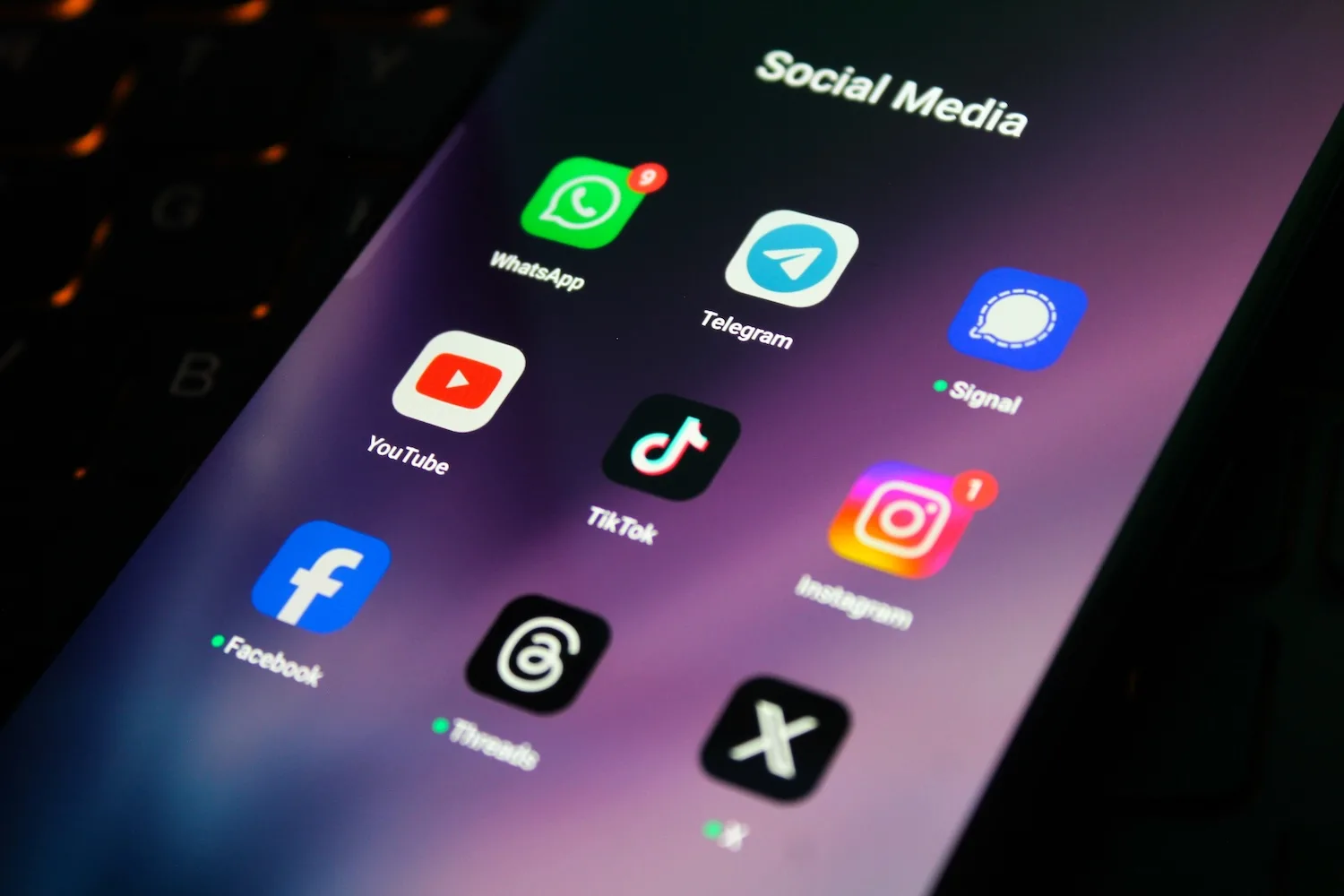
The current state of social media: engage at all costs
According to a survey conducted by Cybersmile, 53% of people in the UK use social media every day (Cybersmile, 2026), with this figure rising to 65% among 16–24-year-olds. Considering how much of our lives are now lived online, you would hope that social media is a space that is, at the very least, safe for your mind.
While it's true that social media can be a place of genuine connection, creativity, and education, it is also an uncomfortable fact that there are very dark corners of social media that many will be exposed to without their consent.
In research I led for Cybersmile, we found that it took only 16 seconds for adult accounts and 8 minutes for child accounts to be exposed to harmful content (Cybersmile, 2026). To paint a picture, this included content glorifying the Nazis, making fun of disabled children and promoting extreme misogynistic views. This content was delivered directly into people's feeds, without a single search, follow, or request.
Even more alarming is what happened next.
Social media algorithms didn't just expose people to this content once. They used passive watching – not liking, not sharing, not commenting – as a signal to serve more of the same. Over the course of three days, the proportion of harmful content in feeds increased by five percentage points per day on average. The algorithm interpreted silence as approval and absence of resistance as an invitation for more.
This is the "engage at all costs" model of social media. The algorithm does not distinguish between content that enriches and content that harms. It knows only one metric: engagement. And harmful content is extraordinarily good at generating it.
These harms are not accidental, and in March this year it was confirmed that the law agrees. During a landmark lawsuit, Meta and YouTube were found liable for deliberately designing addictive products that drove a young user towards depression and suicidal thoughts (BBC, 2026).
And it is not only the addictive nature of social media which makes it harmful. It is the online world that the algorithm shapes, where reality is insidiously and persistently reshaped – where young men come to believe that misogynistic views are normal and acceptable, where racist perspectives are bolstered and justified, and where violence is treated as entertainment.
Why we are so vulnerable: The psychology the algorithm exploits
As a behavioural scientist, what is most concerning is how the algorithm exploits the way our minds already work. Our brains were never built for the modern information environment. They evolved to help us survive in a world of small communities, scarce resources, and physical predators – a world completely different from the overstimulating, algorithm-curated environment of social media. The cognitive shortcuts that once kept us alive are now being weaponised against us by social media platforms in the name of engagement.
To give you an insight into the psychology at work, I've identified 5 key mental biases that the algorithm taps into and exploits when you are scrolling through content on social media:
Confirmation bias
Confirmation bias is our tendency to seek out information that confirms what we already believe. We do this instinctively and largely unconsciously, interpreting information through our current worldview and ignoring or invalidating anything that doesn't agree with it (Ling, 2020).
The algorithm exploits and amplifies this tendency. It creates echo chambers by feeding us content that endlessly validates our existing worldview while filtering out anything that might complicate it. The result is a distorted reality in which beliefs, however extreme, go permanently unchallenged. And our worldview, whether true or false, is further strengthened with every scroll.
The mere exposure effect and the illusory truth effect
Another psychological bias that the algorithm exploits is the mere exposure effect. Psychological research has shown that the more we are exposed to something – an idea, an image, a person – the more we come to like and accept it (Chenier & Winkielman, 2007). This is concerning when what we are exposed to on social media includes influencers with radical and extreme points of view.
Repeated exposure also increases our tendency to believe something is true, a phenomenon known as the illusory truth effect (Udry & Barber, 2024). When harmful views and ideas are served to us repeatedly, we not only become desensitised to them, but we may also begin to internalise them as the truth.
Availability bias
Availability bias describes our tendency to judge how likely something is based on how easily examples come to mind (Tversky & Kahneman, 1974). Put simply, the easier something is to recall, the more our brain treats it as true, common, and representative of the world around us.
In an era where anyone can put anything online, this makes us increasingly susceptible to having our perceptions shaped by information that may not be accurate and, in some cases, is even harmful – simply because we have seen it repeatedly presented to us. When the algorithm pushes repetitive streams of content without distinguishing between what is true or false, helpful or harmful, the result is real-world judgements and decisions built on foundations that aren't trustworthy.
Social norms
Social norms are among the most powerful drivers of human behaviour. We look to others – especially our peers – to gauge which attitudes and behaviours are acceptable (Cialdini et al, 2006).
When algorithms prioritise showing content with high engagement, we can find ourselves exposed to harmful material that has accumulated hundreds of thousands of views and thousands of approving comments. This sends a powerful signal to our brain that this type of content and the views expressed are normal and mainstream. With their identities and worldviews still forming, young people are particularly susceptible to having their values shaped by the perceived norms they encounter online.
Whether intentionally or not, social media algorithms exploit the biases of our human psychology, with little consideration of the consequences and few safeguards in place to protect people. If the algorithm is interacting with our psychology in a way that is exploitative and often sinister, what can be done to protect individuals and society at large from the harms it presents?
What comes next: giving power back to the people
The result of the recent social media addiction trial is hopefully a first step toward progress. A second phase of the trial in May will determine whether meaningful changes will be made to Meta's platforms to protect people from harm (Reuters, 2026).
When that time comes, Cybersmile's PROTECT manifesto would serve as an invaluable resource to begin addressing the harms of the algorithm at a systemic level. At its core, PROTECT argues for something that should be uncontroversial: users, not algorithms, should decide what they see online. Just as data rights have been enshrined as a fundamental user right, so too should content rights – the ability to understand and control your own algorithmic experience.
What you can do right now
While Cybersmile pushes for change at a systemic level, there are steps you can take to guard yourself against the harms of the algorithm in the meantime:
- Reset your algorithm: Platforms such as TikTok and Instagram contain settings that allow you to reset your algorithm. To prevent your content feed from turning into an echo chamber, try resetting your algorithm at a regular cadence, for example, at the start of each calendar month. Setting a calendar reminder will create a visible timely prompt to reflect on whether your current algorithm is serving or harming you.
- Actively engage with the type of content you want to see: This means seeking out content that reflects the values and perspectives you want to see more of and liking, commenting, and following associated influencers to get the algorithm to show you more of this type of content. On the flip side, ensure you don't engage with the type of content you don't want to see. This means avoiding even lingering on this type of content, as the algorithm takes simply watching as a sign to serve you more.
- Introduce friction to stop you from mindless scrolling: Move the app somewhere it is harder to see or access, set time limits and even delete your apps at regular intervals if you are really struggling to stop habitual scrolling. These small barriers disrupt the automatic tendency to scroll, preventing it from being a mindless, default behaviour.
While these steps won't fully erase the harms of the algorithm, they are a helpful place to start. Systemic change is needed, and time will tell whether social media companies make the necessary reforms to protect their users. In the meantime, we need to exercise our agency as individuals to reclaim control from the algorithm, one scroll at a time.
Sources
1. Cybersmile (2026) Forced Feed Report
2. BBC (2026) Social Media Addiction Trial
3. Ling, R. (2020) Confirmation Bias in Mobile News Consumption
4. Chenier, Troy & Winkielman, Piotr (2007) Mere Exposure Effect
5. Udry, J., & Barber, S. J. (2024) Illusory Truth Effect Review
6. Tversky, A., & Kahneman, D. (1974) Heuristics and Biases
7. Cialdini, R. B., Demaine, L. J., Sagarin, B. J., Barrett, D. W., Rhoads, K., & Winter, P. L. (2006) Social Norms and Persuasion
8. Reuters (2026) Social Media Trial Verdicts