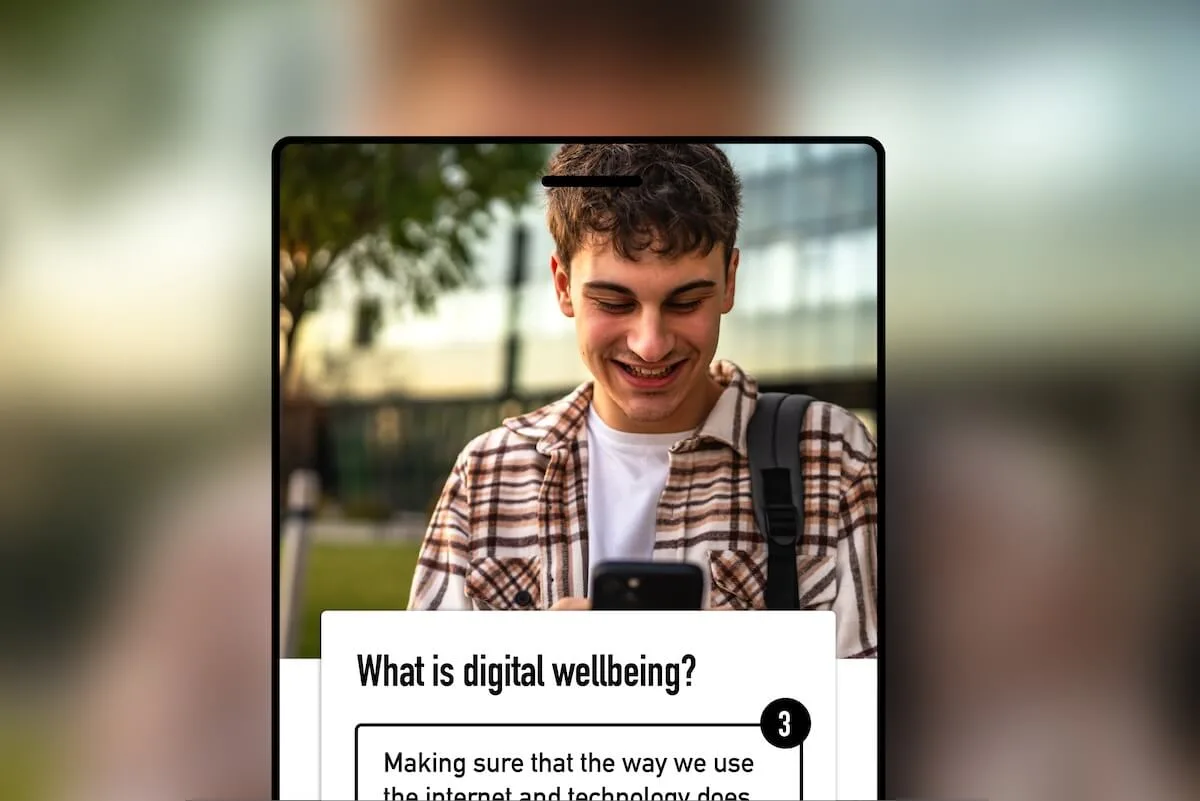
We are proud to announce the launch of Digital Wellbeing 2026, the newest report from our digital wellbeing research series exploring our relationship with existing and emerging technologies and the effect that they are having on our health.
As artificial intelligence and algorithm-driven content rapidly reshape our realities, understanding their impact has never been more important.
Digital Wellbeing 2026 asked 1,000 participants aged 16+ from across the US a series of questions relating to the way that their social media use impacts them physically and emotionally. Important topics such as cyberbullying, artificial intelligence, automated algorithms, smartphone addiction, and many more were all included to offer the most up-to-date insights into current issues that are concerning or impacting the US population.
As part of our recently launched Insights program, our long-term inquiry into the relationship between social media, device use, and wellbeing is supported by our panel of experts from the fields of research, mental health, wellbeing, parenting, and youth development.
This research shows that awareness of online risks around social media, cyberbullying, and emerging issues is high. However, we also know that the vast majority of people feel helpless to protect themselves and lack strategies to engage with digital media safely in a way that safeguards their health and wellbeing.
Dr. Debi Gilboa, Cybersmile Advisory Panel
The data and key insights from Digital Wellbeing 2026 will enable us to identify and develop effective solutions for emerging issues that are affecting large numbers of the population.
Rising Concerns Around AI and Online Harms
The report reveals widespread concern about the role of artificial intelligence in online environments. Among the most pressing issues:
- 79% are concerned about misinformation
- 73% are concerned about deepfakes
- 72% are concerned about dangerous ideologies
- 68% are concerned about mental health impacts, including delusion-based content
- 65% are concerned about harassment and abuse
One of the clearest themes emerging from this year's data is growing concern around artificial intelligence and its influence within online environments.
Social Media's Impact on Mental Health
The data indicates that negative mental health outcomes linked to social media remain widespread:
- 66% say social media has negatively affected their mental health
- 67% say algorithms have negatively affected their mental health
This reinforces concerns that algorithmic amplification may be intensifying exposure to harmful or distressing content.
Body Image and Social Comparison Pressures
The report also highlights the continued influence of social media on self-image and identity:
- 56% say social media has negatively affected how they feel about their body
- 19% say it has made them consider permanent cosmetic changes
- 54% feel pressured to be "perfect"
- 61% feel unsatisfied with their lives when comparing themselves to others
These findings, combined with our previous data, point to a harmful culture of comparison and unrealistic standards online.
Cyberbullying and Online Safety
Despite increased awareness, cyberbullying remains a significant issue:
- 41% of respondents report having experienced cyberbullying or online abuse
- Only 28% feel safe sharing their opinions online
This suggests that many users continue to self-censor or withdraw from online spaces due to fear of backlash or harm.
Wellbeing Habits and Emotional Impact
The report also sheds light on emerging patterns in behavior:
- 23% feel addicted to negative news online
- 27% worry they have a social media addiction
- 49% say they feel better when they spend less time on social media
Together, these insights reflect a growing awareness among users of the need for healthier habits around their technology and social media use.
Explore the full Digital Wellbeing 2026 report for deeper insights, data breakdowns, and emerging trends shaping our lives.
A Call for Collective Action
Our Digital Wellbeing 2026 report underscores the urgent need for collaborative action across platforms, policymakers, educators, and communities.
At Cybersmile, we believe that improving population-level digital wellbeing requires:
- Safer platform design and accountability
- Greater transparency in algorithms and AI systems
- Education that builds resilience, media literacy, and critical thinking
- Accessible support for those affected by online harm
The research was conducted by Censuswide on behalf of Cybersmile between 04.13.2026 and 04.16.2026 across the US. The sample of the study is representative of US demographics across all 50 states.