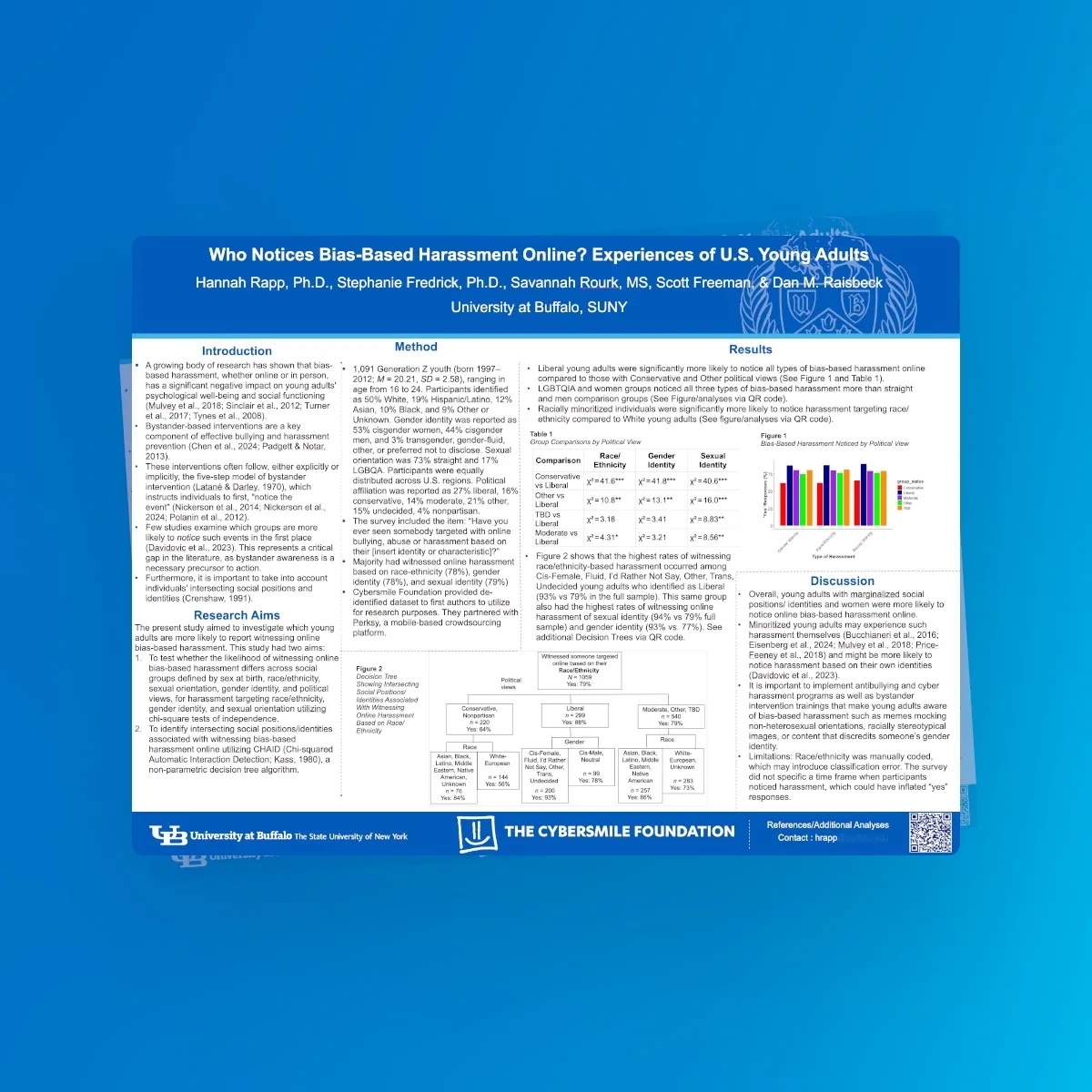
This research-based presentation uses Cybersmile research findings to examine which social and demographic groups of U.S. adolescents and young adults are most likely to notice bias-based online harassment related to race, gender identity, and sexual orientation.
The presentation learning objectives include:
- Understand how social identities might influence whether adolescents and young adults notice bias-based online harassment.
- Explore how political views intersect with gender, race, and sexual orientation to shape Generation Z's awareness of bias-based online harassment.
- Discuss the importance of the "noticing" step in the bystander intervention model and how it can be supported through educational strategies in schools.